A fixed scale
Strength is measured on the same scale every day, so a quiet day shows little or no Best and a strong day shows more. When the chart lights up, it means something.
GoodBetterBest



Focus Your Search
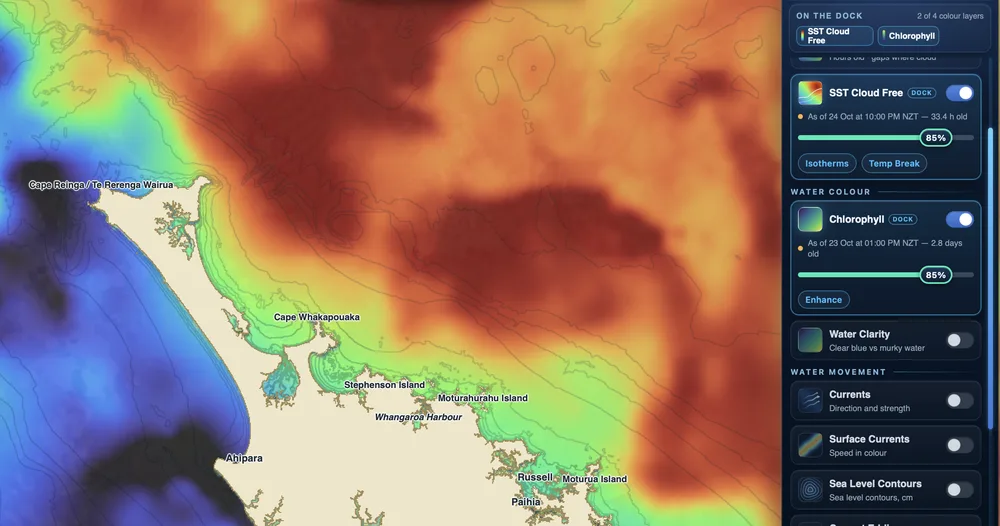
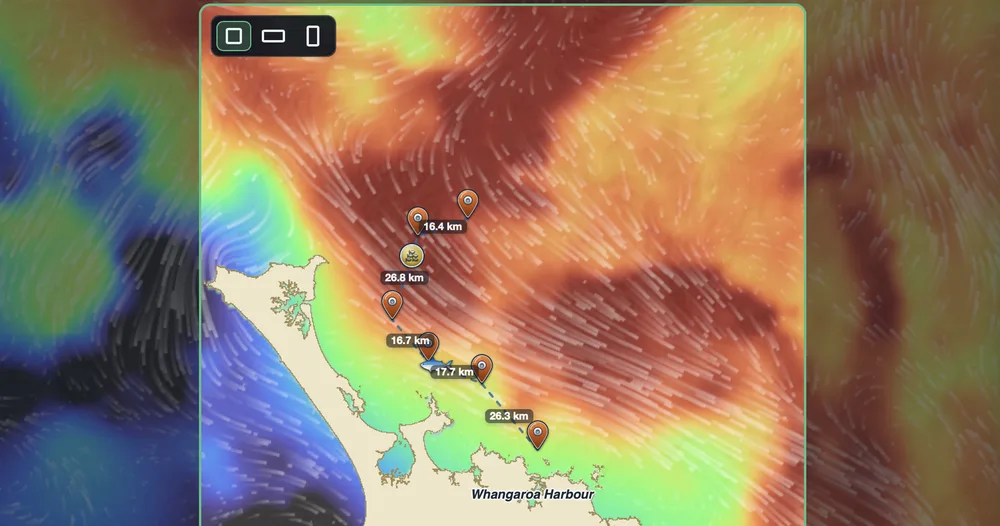
Pelagic Zone Edges brings the temperature, water-colour and eddy signals together and shades the water where they line up. Less guessing, more time on the water that matters.
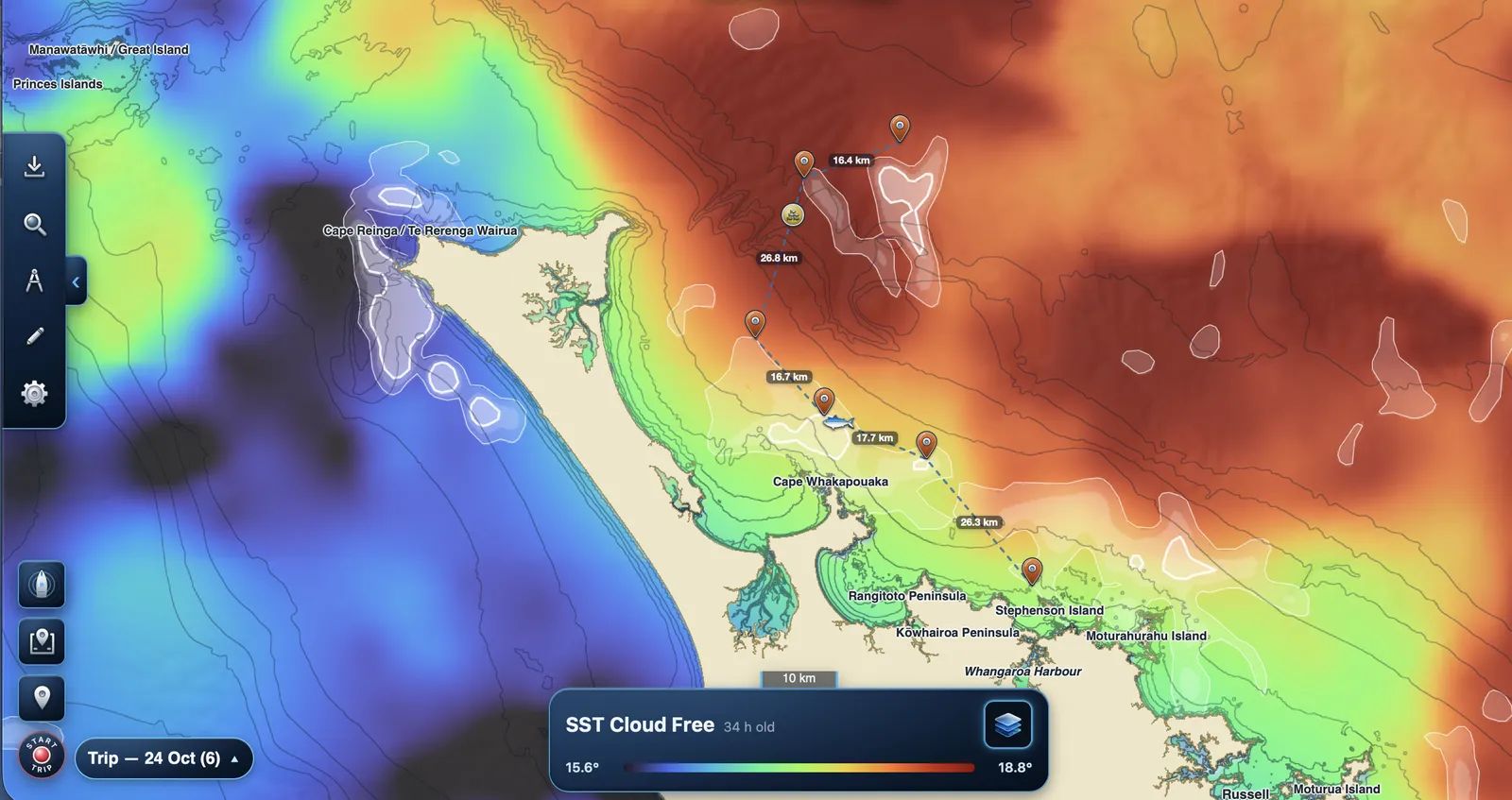
Bait gathers where water types meet, and predators follow. Zone Edges looks for the places where several of those signals line up at once.
Where warm and cool water meet: sea temperature changing fast over a short distance.
Where plankton-rich water meets cleaner water, or where clarity changes sharply.
Spinning water that traps food. Warm-core eddies count more than cold-core.
One strong signal on its own isn't enough. A zone needs at least two lining up.
Zones are shaded in three steps, brighter for stronger water. A thin white line marks the outer edge and a bold white line rings the Best water.
Strength is measured on the same scale every day, so a quiet day shows little or no Best and a strong day shows more. When the chart lights up, it means something.
GoodBetterBest
Tap anywhere in a shaded area to see its step and which signals are driving it. Where cloud has hidden the latest reading, the zone is scored from the other signals and the popup tells you.
The Less / More slider chooses what shows: Best only, Better and Best, or all three. Pair it with Temp Break lines and current streaks to plan your run.
Zone Edges is modelled, not measured: it combines other layers to show where conditions line up for better odds. It doesn't detect fish. Use it to decide where to start looking, then read the water when you get there.
Try the demo with no sign-up, or create a free account for 14 days of full Pro.